





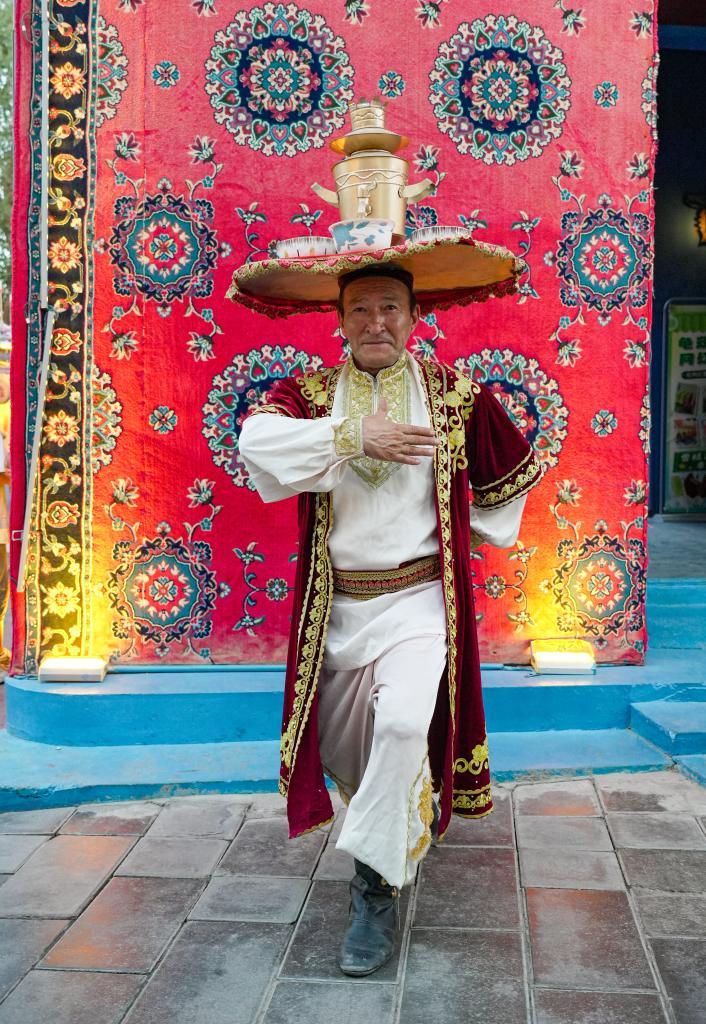
Parhat Emin performs the Samawar dance in the Qiuci Alley of Kuqa City, northwest China's Xinjiang Uygur Autonomous Region, July 22, 2025. In the Qiuci Alley of Kuqa City, northwest China's Xinjiang Uygur Autonomous Region, Parhat Emin performs the Samawar (a Uygur term meaning "tea set") dance, a traditional Uygur greeting dance with a history dating back to the millennium-old ancient Qiuci State. His eyes shine brightly, and his smile is warm and welcoming. With a bronze pot and porcelain bowls balanced steadily on a plate over his head, his body spins smoothly, and his feet move as lightly as the wind. As he dances gracefully to the rhythm of traditional Uygur music, the surrounding audience burst into cheers from time to time.
Kuqa, where the ancient Qiuci State was mainly located, was a vital hub along the ancient Silk Road, bustling with merchants and the tinkle of camel bells. Today the Qiuci Alley is a popular tourist destination in Kuqa. From noon till midnight every day, dances including the Samawar are performed repeatedly in the block, filling the air with constant joy.
The Samawar dance was listed as an intangible cultural heritage of the Xinjiang Uygur Autonomous Region in 2007. Parhat, who has a deep love for this art form, is a key member of the Qiuci Alley's performance team. "This dance is the highest etiquette of our Uygur people for receiving guests," Parhat said. When the dance reaches its climax, he always invites the audience to join in, and joy merges with the music.
Parhat is not only a performer but also an instructor in the team. During intervals between performances, young performers often gather around him, learning movement techniques and listening to him talking about the cultural origins behind the Samawar dance.
The vitality of culture lies not only on the stage but also in the hustle and bustle of daily life. Dancing and cheering with performers and tourists in the Qiuci Alley is a unique segment that is often arranged as part of local couples' wedding ceremonies. Residents are always seen seated at tea houses in the alley, playing a dutar or rewap (both traditional Uygur musical instrument) while singing songs which sound cheerful yet melodious.
Looking at the bustling Qiuci Alley and the dancing crowd, Parhat's eyes crinkle with a smile. "Culture and dance are not supposed to be locked away in a chest," he says. In his opinion, the Samawar dance is endless like the snow water rushing down from the Tianshan Mountains. "The dance is alive. It is meant to be performed and passed on to the young." (Xinhua/Wang Jingqiang)
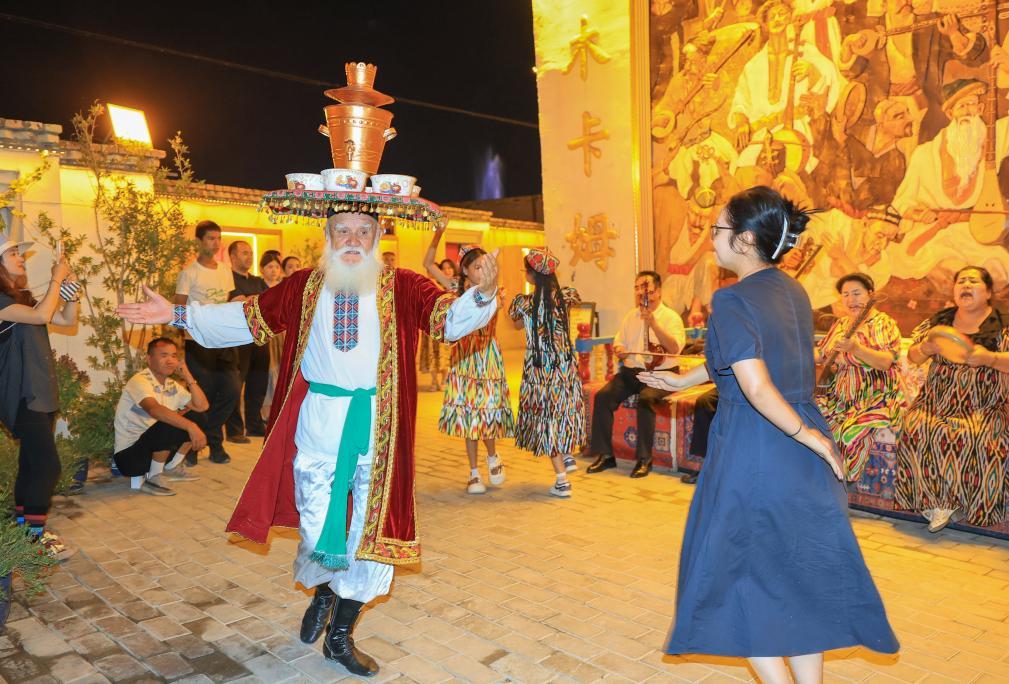
A senior artist performs the Samawar dance in the Qiuci Alley of Kuqa City, northwest China's Xinjiang Uygur Autonomous Region, Aug. 4, 2025. In the Qiuci Alley of Kuqa City, northwest China's Xinjiang Uygur Autonomous Region, Parhat Emin performs the Samawar (a Uygur term meaning "tea set") dance, a traditional Uygur greeting dance with a history dating back to the millennium-old ancient Qiuci State. His eyes shine brightly, and his smile is warm and welcoming. With a bronze pot and porcelain bowls balanced steadily on a plate over his head, his body spins smoothly, and his feet move as lightly as the wind. As he dances gracefully to the rhythm of traditional Uygur music, the surrounding audience burst into cheers from time to time.
Kuqa, where the ancient Qiuci State was mainly located, was a vital hub along the ancient Silk Road, bustling with merchants and the tinkle of camel bells. Today the Qiuci Alley is a popular tourist destination in Kuqa. From noon till midnight every day, dances including the Samawar are performed repeatedly in the block, filling the air with constant joy.
The Samawar dance was listed as an intangible cultural heritage of the Xinjiang Uygur Autonomous Region in 2007. Parhat, who has a deep love for this art form, is a key member of the Qiuci Alley's performance team. "This dance is the highest etiquette of our Uygur people for receiving guests," Parhat said. When the dance reaches its climax, he always invites the audience to join in, and joy merges with the music.
Parhat is not only a performer but also an instructor in the team. During intervals between performances, young performers often gather around him, learning movement techniques and listening to him talking about the cultural origins behind the Samawar dance.
The vitality of culture lies not only on the stage but also in the hustle and bustle of daily life. Dancing and cheering with performers and tourists in the Qiuci Alley is a unique segment that is often arranged as part of local couples' wedding ceremonies. Residents are always seen seated at tea houses in the alley, playing a dutar or rewap (both traditional Uygur musical instrument) while singing songs which sound cheerful yet melodious.
Looking at the bustling Qiuci Alley and the dancing crowd, Parhat's eyes crinkle with a smile. "Culture and dance are not supposed to be locked away in a chest," he says. In his opinion, the Samawar dance is endless like the snow water rushing down from the Tianshan Mountains. "The dance is alive. It is meant to be performed and passed on to the young." (Xinhua/Wang Fei)
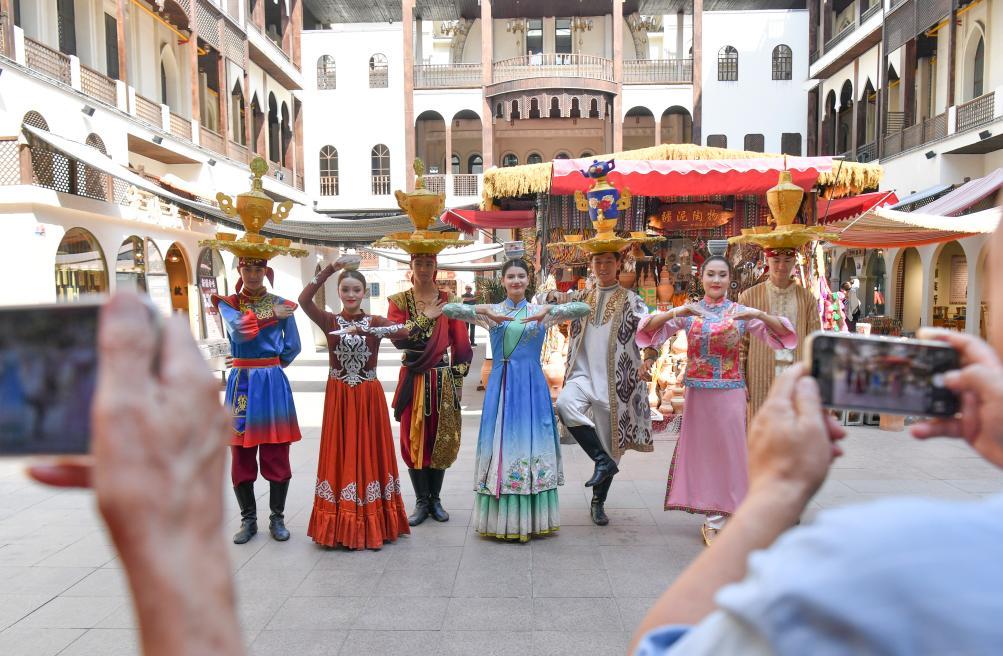
Artists perform the Samawar dance at the Grand Bazaar in Urumqi, northwest China's Xinjiang Uygur Autonomous Region, Sept. 9, 2025. In the Qiuci Alley of Kuqa City, northwest China's Xinjiang Uygur Autonomous Region, Parhat Emin performs the Samawar (a Uygur term meaning "tea set") dance, a traditional Uygur greeting dance with a history dating back to the millennium-old ancient Qiuci State. His eyes shine brightly, and his smile is warm and welcoming. With a bronze pot and porcelain bowls balanced steadily on a plate over his head, his body spins smoothly, and his feet move as lightly as the wind. As he dances gracefully to the rhythm of traditional Uygur music, the surrounding audience burst into cheers from time to time.
Kuqa, where the ancient Qiuci State was mainly located, was a vital hub along the ancient Silk Road, bustling with merchants and the tinkle of camel bells. Today the Qiuci Alley is a popular tourist destination in Kuqa. From noon till midnight every day, dances including the Samawar are performed repeatedly in the block, filling the air with constant joy.
The Samawar dance was listed as an intangible cultural heritage of the Xinjiang Uygur Autonomous Region in 2007. Parhat, who has a deep love for this art form, is a key member of the Qiuci Alley's performance team. "This dance is the highest etiquette of our Uygur people for receiving guests," Parhat said. When the dance reaches its climax, he always invites the audience to join in, and joy merges with the music.
Parhat is not only a performer but also an instructor in the team. During intervals between performances, young performers often gather around him, learning movement techniques and listening to him talking about the cultural origins behind the Samawar dance.
The vitality of culture lies not only on the stage but also in the hustle and bustle of daily life. Dancing and cheering with performers and tourists in the Qiuci Alley is a unique segment that is often arranged as part of local couples' wedding ceremonies. Residents are always seen seated at tea houses in the alley, playing a dutar or rewap (both traditional Uygur musical instrument) while singing songs which sound cheerful yet melodious.
Looking at the bustling Qiuci Alley and the dancing crowd, Parhat's eyes crinkle with a smile. "Culture and dance are not supposed to be locked away in a chest," he says. In his opinion, the Samawar dance is endless like the snow water rushing down from the Tianshan Mountains. "The dance is alive. It is meant to be performed and passed on to the young." (Xinhua/Wang Fei)
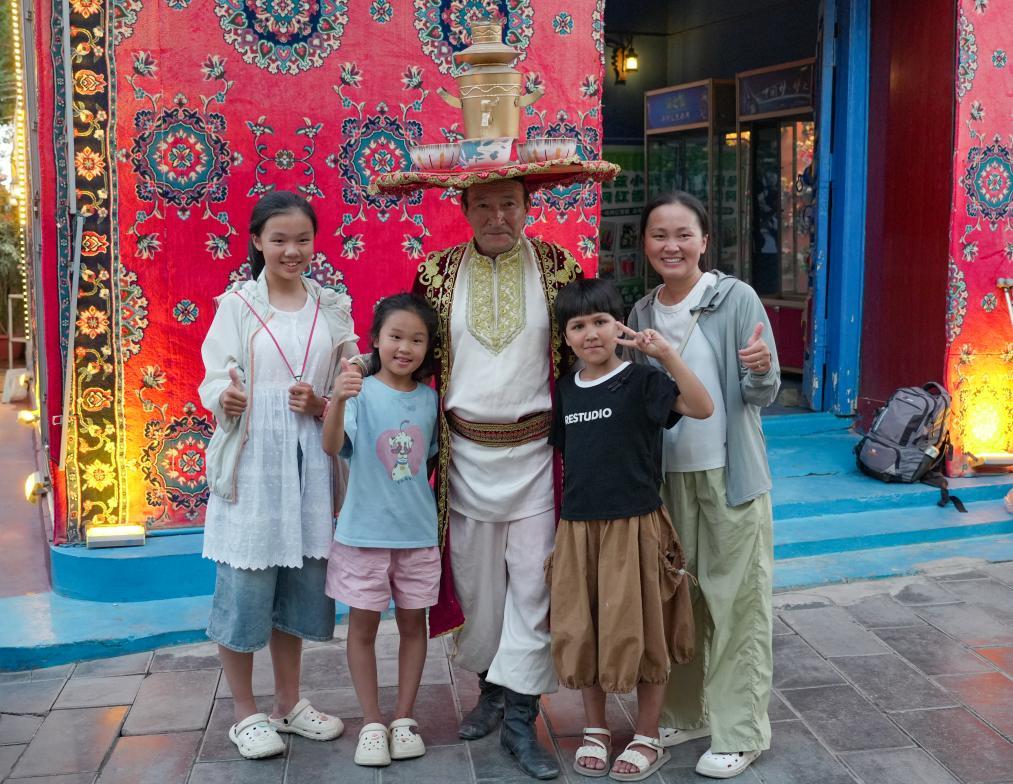
Parhat Emin (C) poses for a photo with tourists after performing the Samawar dance in the Qiuci Alley of Kuqa City, northwest China's Xinjiang Uygur Autonomous Region, July 22, 2025. In the Qiuci Alley of Kuqa City, northwest China's Xinjiang Uygur Autonomous Region, Parhat Emin performs the Samawar (a Uygur term meaning "tea set") dance, a traditional Uygur greeting dance with a history dating back to the millennium-old ancient Qiuci State. His eyes shine brightly, and his smile is warm and welcoming. With a bronze pot and porcelain bowls balanced steadily on a plate over his head, his body spins smoothly, and his feet move as lightly as the wind. As he dances gracefully to the rhythm of traditional Uygur music, the surrounding audience burst into cheers from time to time.
Kuqa, where the ancient Qiuci State was mainly located, was a vital hub along the ancient Silk Road, bustling with merchants and the tinkle of camel bells. Today the Qiuci Alley is a popular tourist destination in Kuqa. From noon till midnight every day, dances including the Samawar are performed repeatedly in the block, filling the air with constant joy.
The Samawar dance was listed as an intangible cultural heritage of the Xinjiang Uygur Autonomous Region in 2007. Parhat, who has a deep love for this art form, is a key member of the Qiuci Alley's performance team. "This dance is the highest etiquette of our Uygur people for receiving guests," Parhat said. When the dance reaches its climax, he always invites the audience to join in, and joy merges with the music.
Parhat is not only a performer but also an instructor in the team. During intervals between performances, young performers often gather around him, learning movement techniques and listening to him talking about the cultural origins behind the Samawar dance.
The vitality of culture lies not only on the stage but also in the hustle and bustle of daily life. Dancing and cheering with performers and tourists in the Qiuci Alley is a unique segment that is often arranged as part of local couples' wedding ceremonies. Residents are always seen seated at tea houses in the alley, playing a dutar or rewap (both traditional Uygur musical instrument) while singing songs which sound cheerful yet melodious.
Looking at the bustling Qiuci Alley and the dancing crowd, Parhat's eyes crinkle with a smile. "Culture and dance are not supposed to be locked away in a chest," he says. In his opinion, the Samawar dance is endless like the snow water rushing down from the Tianshan Mountains. "The dance is alive. It is meant to be performed and passed on to the young." (Xinhua/Wang Jingqiang)
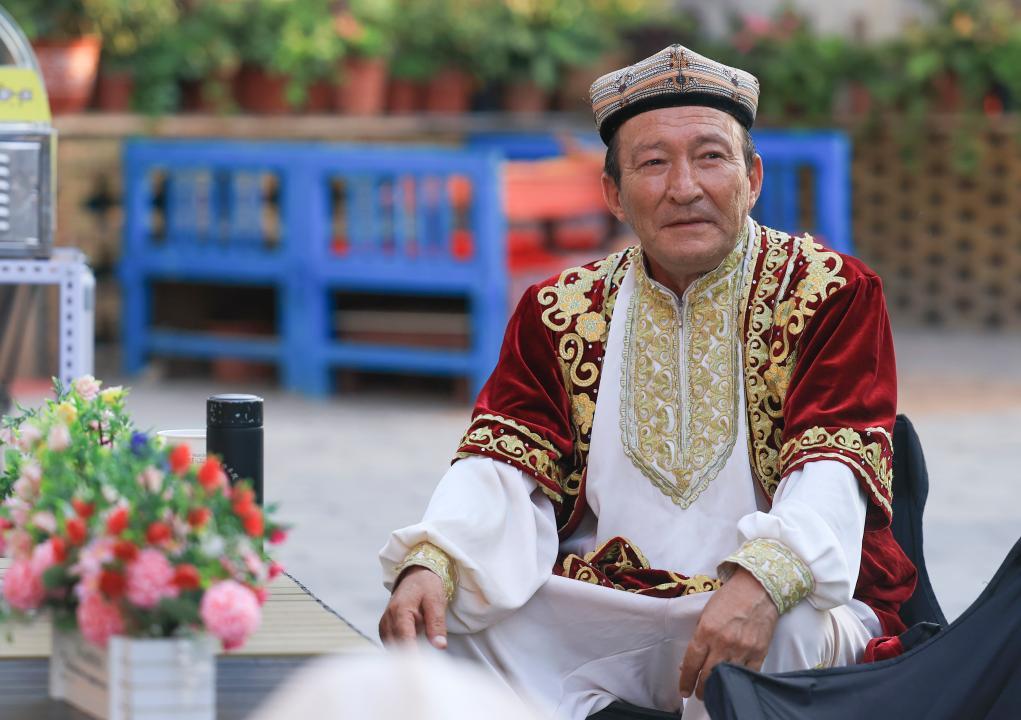
Parhat Emin takes a break in the Qiuci Alley of Kuqa City, northwest China's Xinjiang Uygur Autonomous Region, July 22, 2025. In the Qiuci Alley of Kuqa City, northwest China's Xinjiang Uygur Autonomous Region, Parhat Emin performs the Samawar (a Uygur term meaning "tea set") dance, a traditional Uygur greeting dance with a history dating back to the millennium-old ancient Qiuci State. His eyes shine brightly, and his smile is warm and welcoming. With a bronze pot and porcelain bowls balanced steadily on a plate over his head, his body spins smoothly, and his feet move as lightly as the wind. As he dances gracefully to the rhythm of traditional Uygur music, the surrounding audience burst into cheers from time to time.
Kuqa, where the ancient Qiuci State was mainly located, was a vital hub along the ancient Silk Road, bustling with merchants and the tinkle of camel bells. Today the Qiuci Alley is a popular tourist destination in Kuqa. From noon till midnight every day, dances including the Samawar are performed repeatedly in the block, filling the air with constant joy.
The Samawar dance was listed as an intangible cultural heritage of the Xinjiang Uygur Autonomous Region in 2007. Parhat, who has a deep love for this art form, is a key member of the Qiuci Alley's performance team. "This dance is the highest etiquette of our Uygur people for receiving guests," Parhat said. When the dance reaches its climax, he always invites the audience to join in, and joy merges with the music.
Parhat is not only a performer but also an instructor in the team. During intervals between performances, young performers often gather around him, learning movement techniques and listening to him talking about the cultural origins behind the Samawar dance.
The vitality of culture lies not only on the stage but also in the hustle and bustle of daily life. Dancing and cheering with performers and tourists in the Qiuci Alley is a unique segment that is often arranged as part of local couples' wedding ceremonies. Residents are always seen seated at tea houses in the alley, playing a dutar or rewap (both traditional Uygur musical instrument) while singing songs which sound cheerful yet melodious.
Looking at the bustling Qiuci Alley and the dancing crowd, Parhat's eyes crinkle with a smile. "Culture and dance are not supposed to be locked away in a chest," he says. In his opinion, the Samawar dance is endless like the snow water rushing down from the Tianshan Mountains. "The dance is alive. It is meant to be performed and passed on to the young." (Xinhua/Wang Fei)
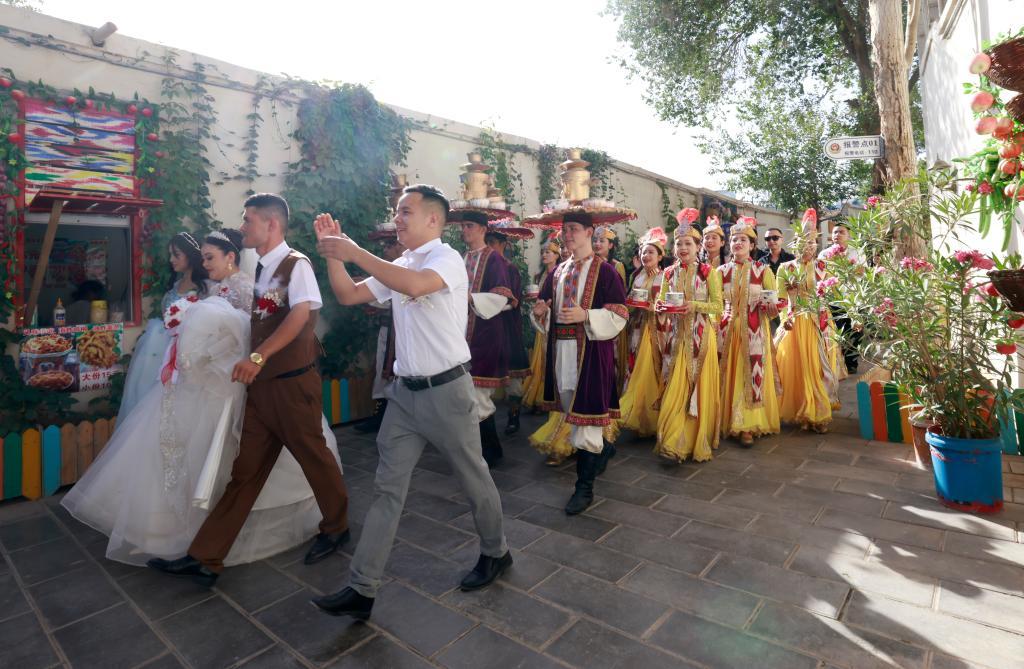
Performers participate in a wedding ceremony in the Qiuci Alley of Kuqa City, northwest China's Xinjiang Uygur Autonomous Region, July 22, 2025. In the Qiuci Alley of Kuqa City, northwest China's Xinjiang Uygur Autonomous Region, Parhat Emin performs the Samawar (a Uygur term meaning "tea set") dance, a traditional Uygur greeting dance with a history dating back to the millennium-old ancient Qiuci State. His eyes shine brightly, and his smile is warm and welcoming. With a bronze pot and porcelain bowls balanced steadily on a plate over his head, his body spins smoothly, and his feet move as lightly as the wind. As he dances gracefully to the rhythm of traditional Uygur music, the surrounding audience burst into cheers from time to time.
Kuqa, where the ancient Qiuci State was mainly located, was a vital hub along the ancient Silk Road, bustling with merchants and the tinkle of camel bells. Today the Qiuci Alley is a popular tourist destination in Kuqa. From noon till midnight every day, dances including the Samawar are performed repeatedly in the block, filling the air with constant joy.
The Samawar dance was listed as an intangible cultural heritage of the Xinjiang Uygur Autonomous Region in 2007. Parhat, who has a deep love for this art form, is a key member of the Qiuci Alley's performance team. "This dance is the highest etiquette of our Uygur people for receiving guests," Parhat said. When the dance reaches its climax, he always invites the audience to join in, and joy merges with the music.
Parhat is not only a performer but also an instructor in the team. During intervals between performances, young performers often gather around him, learning movement techniques and listening to him talking about the cultural origins behind the Samawar dance.
The vitality of culture lies not only on the stage but also in the hustle and bustle of daily life. Dancing and cheering with performers and tourists in the Qiuci Alley is a unique segment that is often arranged as part of local couples' wedding ceremonies. Residents are always seen seated at tea houses in the alley, playing a dutar or rewap (both traditional Uygur musical instrument) while singing songs which sound cheerful yet melodious.
Looking at the bustling Qiuci Alley and the dancing crowd, Parhat's eyes crinkle with a smile. "Culture and dance are not supposed to be locked away in a chest," he says. In his opinion, the Samawar dance is endless like the snow water rushing down from the Tianshan Mountains. "The dance is alive. It is meant to be performed and passed on to the young." (Xinhua/Wang Fei)
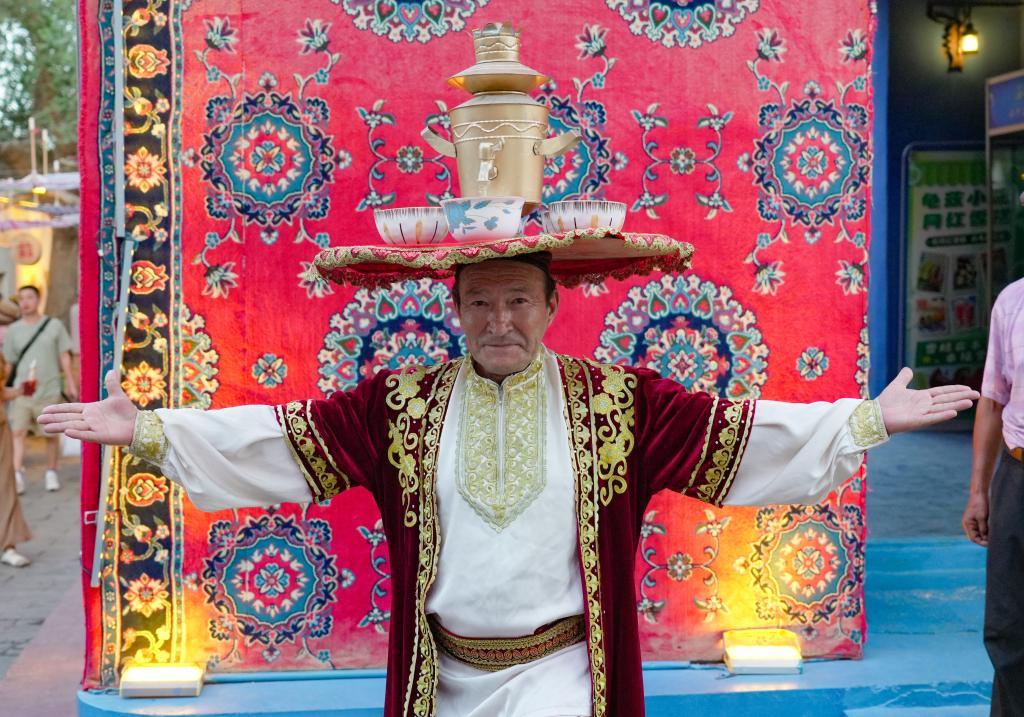
Parhat Emin performs the Samawar dance in the Qiuci Alley of Kuqa City, northwest China's Xinjiang Uygur Autonomous Region, July 22, 2025. In the Qiuci Alley of Kuqa City, northwest China's Xinjiang Uygur Autonomous Region, Parhat Emin performs the Samawar (a Uygur term meaning "tea set") dance, a traditional Uygur greeting dance with a history dating back to the millennium-old ancient Qiuci State. His eyes shine brightly, and his smile is warm and welcoming. With a bronze pot and porcelain bowls balanced steadily on a plate over his head, his body spins smoothly, and his feet move as lightly as the wind. As he dances gracefully to the rhythm of traditional Uygur music, the surrounding audience burst into cheers from time to time.
Kuqa, where the ancient Qiuci State was mainly located, was a vital hub along the ancient Silk Road, bustling with merchants and the tinkle of camel bells. Today the Qiuci Alley is a popular tourist destination in Kuqa. From noon till midnight every day, dances including the Samawar are performed repeatedly in the block, filling the air with constant joy.
The Samawar dance was listed as an intangible cultural heritage of the Xinjiang Uygur Autonomous Region in 2007. Parhat, who has a deep love for this art form, is a key member of the Qiuci Alley's performance team. "This dance is the highest etiquette of our Uygur people for receiving guests," Parhat said. When the dance reaches its climax, he always invites the audience to join in, and joy merges with the music.
Parhat is not only a performer but also an instructor in the team. During intervals between performances, young performers often gather around him, learning movement techniques and listening to him talking about the cultural origins behind the Samawar dance.
The vitality of culture lies not only on the stage but also in the hustle and bustle of daily life. Dancing and cheering with performers and tourists in the Qiuci Alley is a unique segment that is often arranged as part of local couples' wedding ceremonies. Residents are always seen seated at tea houses in the alley, playing a dutar or rewap (both traditional Uygur musical instrument) while singing songs which sound cheerful yet melodious.
Looking at the bustling Qiuci Alley and the dancing crowd, Parhat's eyes crinkle with a smile. "Culture and dance are not supposed to be locked away in a chest," he says. In his opinion, the Samawar dance is endless like the snow water rushing down from the Tianshan Mountains. "The dance is alive. It is meant to be performed and passed on to the young." (Xinhua/Wang Jingqiang)
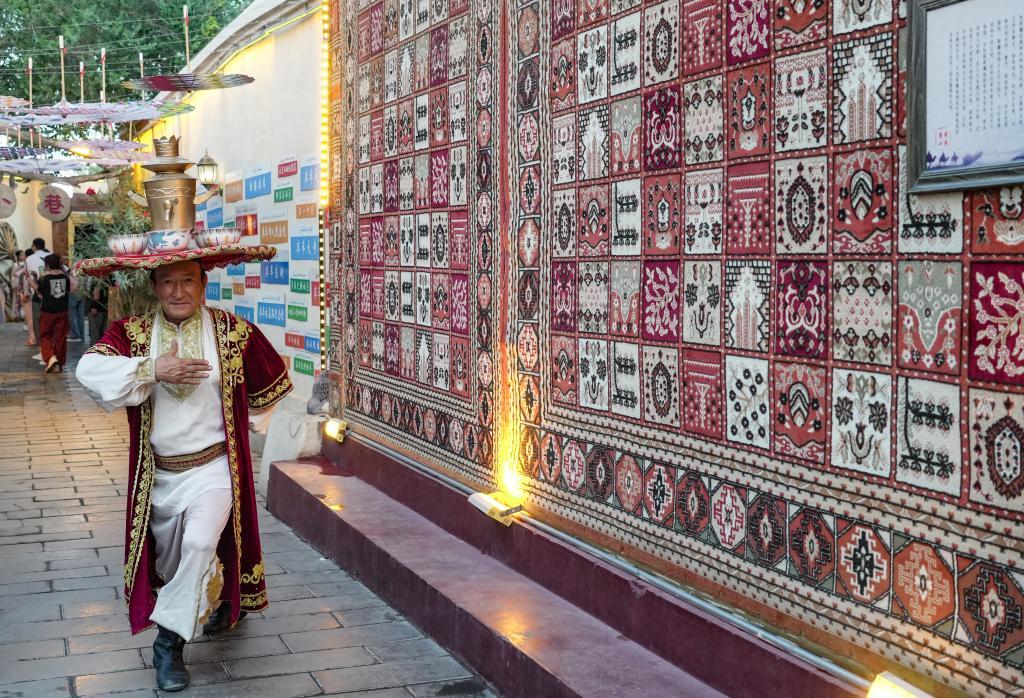
Parhat Emin performs the Samawar dance in the Qiuci Alley of Kuqa City, northwest China's Xinjiang Uygur Autonomous Region, July 22, 2025. In the Qiuci Alley of Kuqa City, northwest China's Xinjiang Uygur Autonomous Region, Parhat Emin performs the Samawar (a Uygur term meaning "tea set") dance, a traditional Uygur greeting dance with a history dating back to the millennium-old ancient Qiuci State. His eyes shine brightly, and his smile is warm and welcoming. With a bronze pot and porcelain bowls balanced steadily on a plate over his head, his body spins smoothly, and his feet move as lightly as the wind. As he dances gracefully to the rhythm of traditional Uygur music, the surrounding audience burst into cheers from time to time.
Kuqa, where the ancient Qiuci State was mainly located, was a vital hub along the ancient Silk Road, bustling with merchants and the tinkle of camel bells. Today the Qiuci Alley is a popular tourist destination in Kuqa. From noon till midnight every day, dances including the Samawar are performed repeatedly in the block, filling the air with constant joy.
The Samawar dance was listed as an intangible cultural heritage of the Xinjiang Uygur Autonomous Region in 2007. Parhat, who has a deep love for this art form, is a key member of the Qiuci Alley's performance team. "This dance is the highest etiquette of our Uygur people for receiving guests," Parhat said. When the dance reaches its climax, he always invites the audience to join in, and joy merges with the music.
Parhat is not only a performer but also an instructor in the team. During intervals between performances, young performers often gather around him, learning movement techniques and listening to him talking about the cultural origins behind the Samawar dance.
The vitality of culture lies not only on the stage but also in the hustle and bustle of daily life. Dancing and cheering with performers and tourists in the Qiuci Alley is a unique segment that is often arranged as part of local couples' wedding ceremonies. Residents are always seen seated at tea houses in the alley, playing a dutar or rewap (both traditional Uygur musical instrument) while singing songs which sound cheerful yet melodious.
Looking at the bustling Qiuci Alley and the dancing crowd, Parhat's eyes crinkle with a smile. "Culture and dance are not supposed to be locked away in a chest," he says. In his opinion, the Samawar dance is endless like the snow water rushing down from the Tianshan Mountains. "The dance is alive. It is meant to be performed and passed on to the young." (Xinhua/Wang Jingqiang)
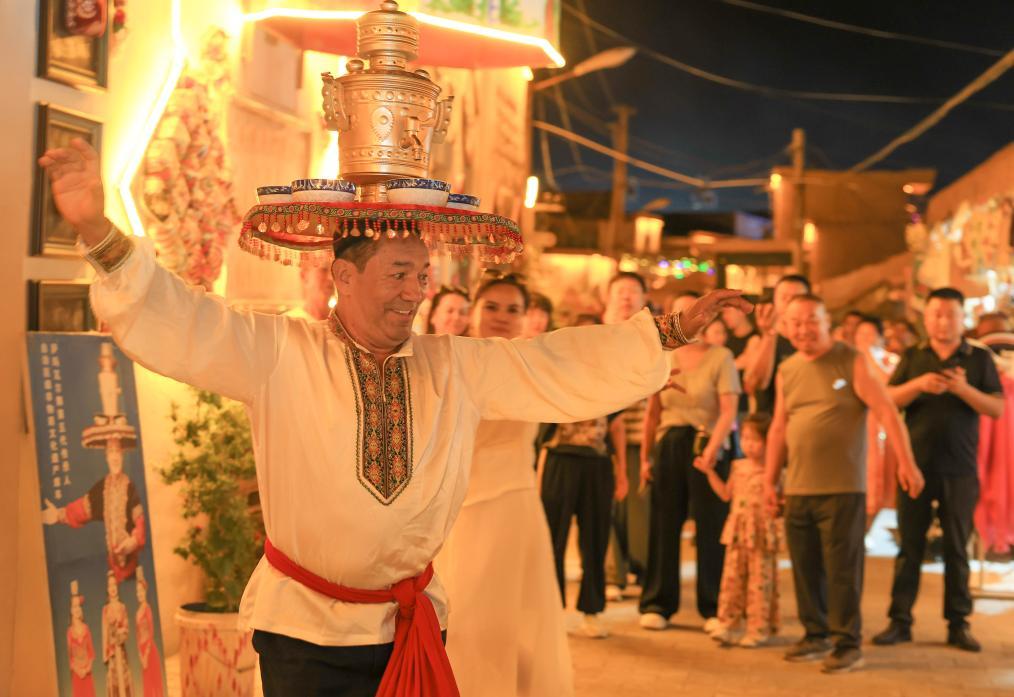
Ahmat Mollaq performs the Samawar dance in the Qiuci Alley of Kuqa City, northwest China's Xinjiang Uygur Autonomous Region, Aug. 4, 2025. In the Qiuci Alley of Kuqa City, northwest China's Xinjiang Uygur Autonomous Region, Parhat Emin performs the Samawar (a Uygur term meaning "tea set") dance, a traditional Uygur greeting dance with a history dating back to the millennium-old ancient Qiuci State. His eyes shine brightly, and his smile is warm and welcoming. With a bronze pot and porcelain bowls balanced steadily on a plate over his head, his body spins smoothly, and his feet move as lightly as the wind. As he dances gracefully to the rhythm of traditional Uygur music, the surrounding audience burst into cheers from time to time.
Kuqa, where the ancient Qiuci State was mainly located, was a vital hub along the ancient Silk Road, bustling with merchants and the tinkle of camel bells. Today the Qiuci Alley is a popular tourist destination in Kuqa. From noon till midnight every day, dances including the Samawar are performed repeatedly in the block, filling the air with constant joy.
The Samawar dance was listed as an intangible cultural heritage of the Xinjiang Uygur Autonomous Region in 2007. Parhat, who has a deep love for this art form, is a key member of the Qiuci Alley's performance team. "This dance is the highest etiquette of our Uygur people for receiving guests," Parhat said. When the dance reaches its climax, he always invites the audience to join in, and joy merges with the music.
Parhat is not only a performer but also an instructor in the team. During intervals between performances, young performers often gather around him, learning movement techniques and listening to him talking about the cultural origins behind the Samawar dance.
The vitality of culture lies not only on the stage but also in the hustle and bustle of daily life. Dancing and cheering with performers and tourists in the Qiuci Alley is a unique segment that is often arranged as part of local couples' wedding ceremonies. Residents are always seen seated at tea houses in the alley, playing a dutar or rewap (both traditional Uygur musical instrument) while singing songs which sound cheerful yet melodious.
Looking at the bustling Qiuci Alley and the dancing crowd, Parhat's eyes crinkle with a smile. "Culture and dance are not supposed to be locked away in a chest," he says. In his opinion, the Samawar dance is endless like the snow water rushing down from the Tianshan Mountains. "The dance is alive. It is meant to be performed and passed on to the young." (Xinhua/Wang Fei)
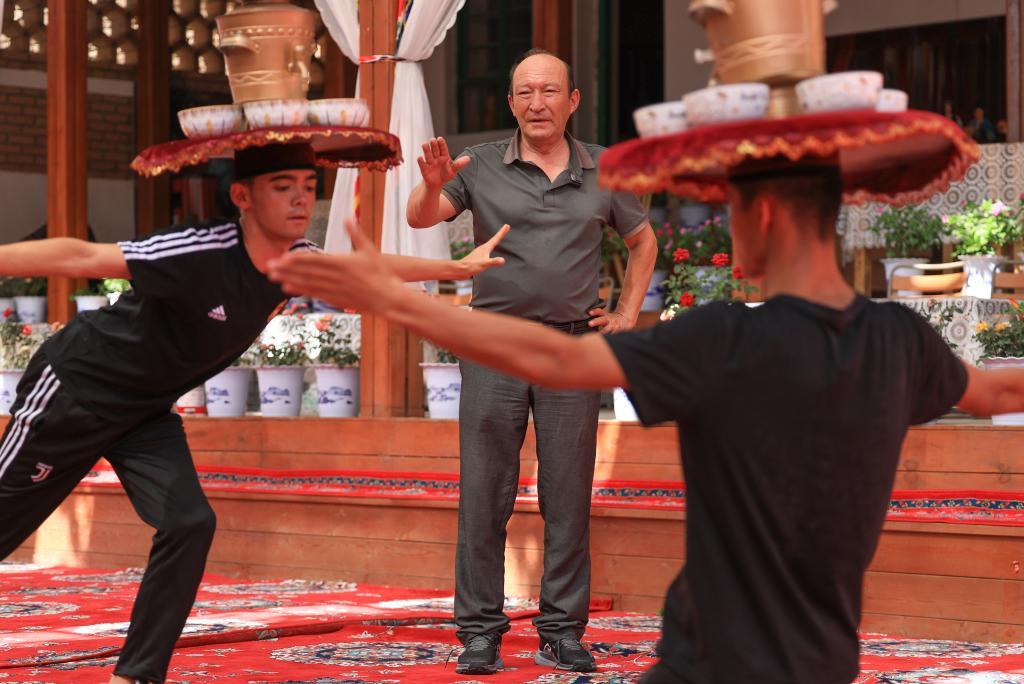
Parhat Emin (C) teaches young dancers the move of Samawar dance in the Qiuci Alley of Kuqa City, northwest China's Xinjiang Uygur Autonomous Region, July 22, 2025. In the Qiuci Alley of Kuqa City, northwest China's Xinjiang Uygur Autonomous Region, Parhat Emin performs the Samawar (a Uygur term meaning "tea set") dance, a traditional Uygur greeting dance with a history dating back to the millennium-old ancient Qiuci State. His eyes shine brightly, and his smile is warm and welcoming. With a bronze pot and porcelain bowls balanced steadily on a plate over his head, his body spins smoothly, and his feet move as lightly as the wind. As he dances gracefully to the rhythm of traditional Uygur music, the surrounding audience burst into cheers from time to time.
Kuqa, where the ancient Qiuci State was mainly located, was a vital hub along the ancient Silk Road, bustling with merchants and the tinkle of camel bells. Today the Qiuci Alley is a popular tourist destination in Kuqa. From noon till midnight every day, dances including the Samawar are performed repeatedly in the block, filling the air with constant joy.
The Samawar dance was listed as an intangible cultural heritage of the Xinjiang Uygur Autonomous Region in 2007. Parhat, who has a deep love for this art form, is a key member of the Qiuci Alley's performance team. "This dance is the highest etiquette of our Uygur people for receiving guests," Parhat said. When the dance reaches its climax, he always invites the audience to join in, and joy merges with the music.
Parhat is not only a performer but also an instructor in the team. During intervals between performances, young performers often gather around him, learning movement techniques and listening to him talking about the cultural origins behind the Samawar dance.
The vitality of culture lies not only on the stage but also in the hustle and bustle of daily life. Dancing and cheering with performers and tourists in the Qiuci Alley is a unique segment that is often arranged as part of local couples' wedding ceremonies. Residents are always seen seated at tea houses in the alley, playing a dutar or rewap (both traditional Uygur musical instrument) while singing songs which sound cheerful yet melodious.
Looking at the bustling Qiuci Alley and the dancing crowd, Parhat's eyes crinkle with a smile. "Culture and dance are not supposed to be locked away in a chest," he says. In his opinion, the Samawar dance is endless like the snow water rushing down from the Tianshan Mountains. "The dance is alive. It is meant to be performed and passed on to the young." (Xinhua/Wang Fei)
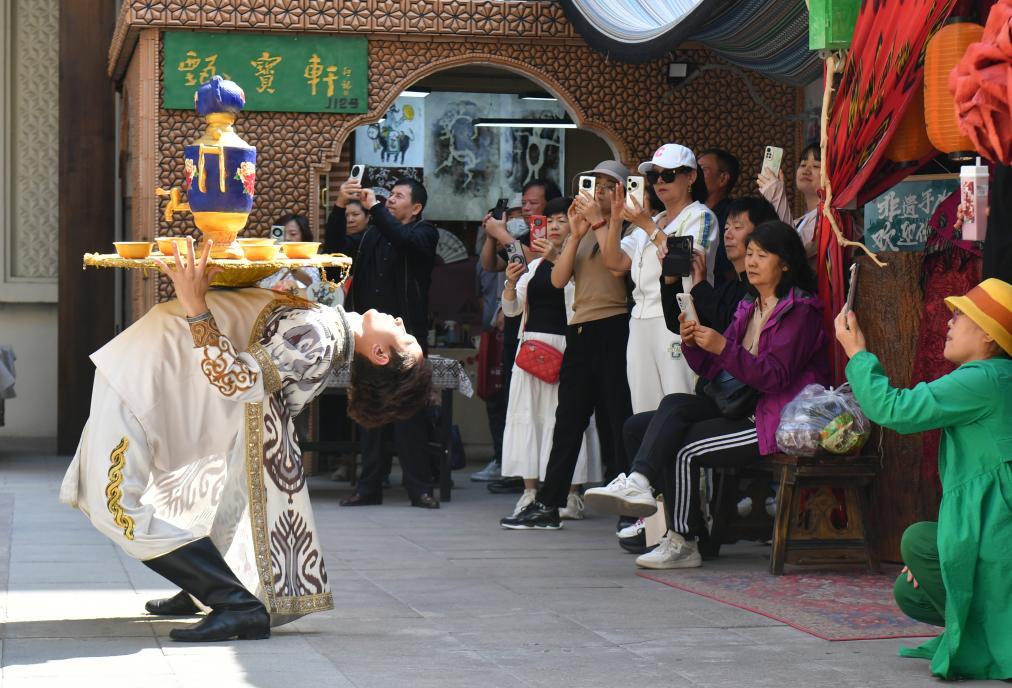
An artist performs the Samawar dance at the Grand Bazaar in Urumqi, northwest China's Xinjiang Uygur Autonomous Region, Sept. 9, 2025. In the Qiuci Alley of Kuqa City, northwest China's Xinjiang Uygur Autonomous Region, Parhat Emin performs the Samawar (a Uygur term meaning "tea set") dance, a traditional Uygur greeting dance with a history dating back to the millennium-old ancient Qiuci State. His eyes shine brightly, and his smile is warm and welcoming. With a bronze pot and porcelain bowls balanced steadily on a plate over his head, his body spins smoothly, and his feet move as lightly as the wind. As he dances gracefully to the rhythm of traditional Uygur music, the surrounding audience burst into cheers from time to time.
Kuqa, where the ancient Qiuci State was mainly located, was a vital hub along the ancient Silk Road, bustling with merchants and the tinkle of camel bells. Today the Qiuci Alley is a popular tourist destination in Kuqa. From noon till midnight every day, dances including the Samawar are performed repeatedly in the block, filling the air with constant joy.
The Samawar dance was listed as an intangible cultural heritage of the Xinjiang Uygur Autonomous Region in 2007. Parhat, who has a deep love for this art form, is a key member of the Qiuci Alley's performance team. "This dance is the highest etiquette of our Uygur people for receiving guests," Parhat said. When the dance reaches its climax, he always invites the audience to join in, and joy merges with the music.
Parhat is not only a performer but also an instructor in the team. During intervals between performances, young performers often gather around him, learning movement techniques and listening to him talking about the cultural origins behind the Samawar dance.
The vitality of culture lies not only on the stage but also in the hustle and bustle of daily life. Dancing and cheering with performers and tourists in the Qiuci Alley is a unique segment that is often arranged as part of local couples' wedding ceremonies. Residents are always seen seated at tea houses in the alley, playing a dutar or rewap (both traditional Uygur musical instrument) while singing songs which sound cheerful yet melodious.
Looking at the bustling Qiuci Alley and the dancing crowd, Parhat's eyes crinkle with a smile. "Culture and dance are not supposed to be locked away in a chest," he says. In his opinion, the Samawar dance is endless like the snow water rushing down from the Tianshan Mountains. "The dance is alive. It is meant to be performed and passed on to the young." (Xinhua/Wang Fei)
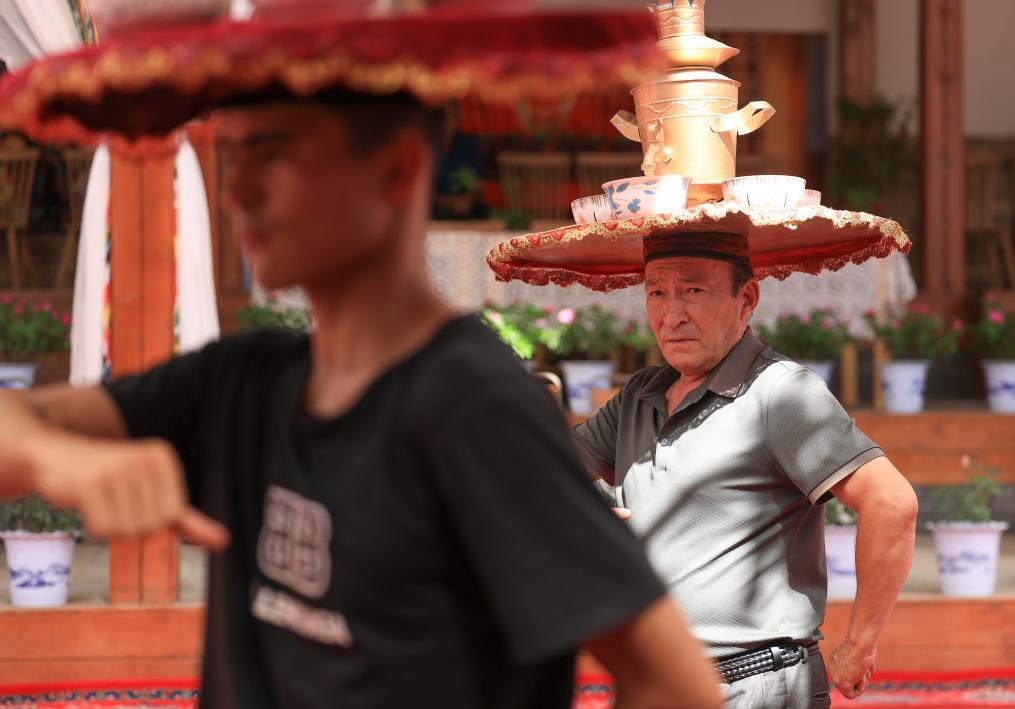
Parhat Emin (R) teaches young dancers the move of Samawar dance in the Qiuci Alley of Kuqa City, northwest China's Xinjiang Uygur Autonomous Region, July 22, 2025. In the Qiuci Alley of Kuqa City, northwest China's Xinjiang Uygur Autonomous Region, Parhat Emin performs the Samawar (a Uygur term meaning "tea set") dance, a traditional Uygur greeting dance with a history dating back to the millennium-old ancient Qiuci State. His eyes shine brightly, and his smile is warm and welcoming. With a bronze pot and porcelain bowls balanced steadily on a plate over his head, his body spins smoothly, and his feet move as lightly as the wind. As he dances gracefully to the rhythm of traditional Uygur music, the surrounding audience burst into cheers from time to time.
Kuqa, where the ancient Qiuci State was mainly located, was a vital hub along the ancient Silk Road, bustling with merchants and the tinkle of camel bells. Today the Qiuci Alley is a popular tourist destination in Kuqa. From noon till midnight every day, dances including the Samawar are performed repeatedly in the block, filling the air with constant joy.
The Samawar dance was listed as an intangible cultural heritage of the Xinjiang Uygur Autonomous Region in 2007. Parhat, who has a deep love for this art form, is a key member of the Qiuci Alley's performance team. "This dance is the highest etiquette of our Uygur people for receiving guests," Parhat said. When the dance reaches its climax, he always invites the audience to join in, and joy merges with the music.
Parhat is not only a performer but also an instructor in the team. During intervals between performances, young performers often gather around him, learning movement techniques and listening to him talking about the cultural origins behind the Samawar dance.
The vitality of culture lies not only on the stage but also in the hustle and bustle of daily life. Dancing and cheering with performers and tourists in the Qiuci Alley is a unique segment that is often arranged as part of local couples' wedding ceremonies. Residents are always seen seated at tea houses in the alley, playing a dutar or rewap (both traditional Uygur musical instrument) while singing songs which sound cheerful yet melodious.
Looking at the bustling Qiuci Alley and the dancing crowd, Parhat's eyes crinkle with a smile. "Culture and dance are not supposed to be locked away in a chest," he says. In his opinion, the Samawar dance is endless like the snow water rushing down from the Tianshan Mountains. "The dance is alive. It is meant to be performed and passed on to the young." (Xinhua/Xu Xiaoxuan)
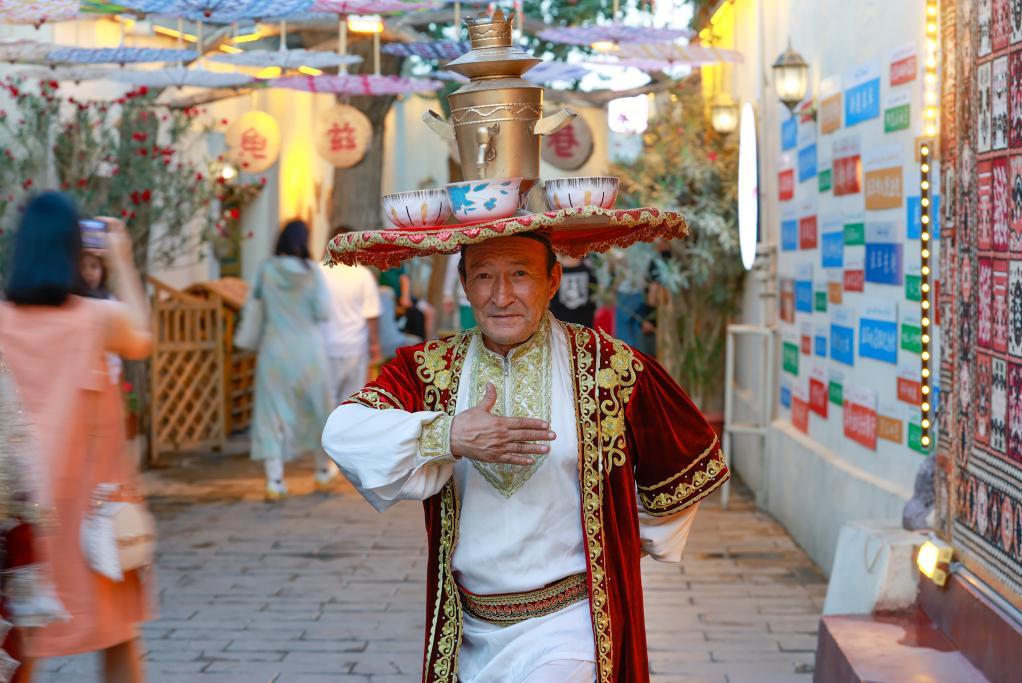
Parhat Emin performs the Samawar dance in the Qiuci Alley of Kuqa City, northwest China's Xinjiang Uygur Autonomous Region, July 22, 2025. In the Qiuci Alley of Kuqa City, northwest China's Xinjiang Uygur Autonomous Region, Parhat Emin performs the Samawar (a Uygur term meaning "tea set") dance, a traditional Uygur greeting dance with a history dating back to the millennium-old ancient Qiuci State. His eyes shine brightly, and his smile is warm and welcoming. With a bronze pot and porcelain bowls balanced steadily on a plate over his head, his body spins smoothly, and his feet move as lightly as the wind. As he dances gracefully to the rhythm of traditional Uygur music, the surrounding audience burst into cheers from time to time.
Kuqa, where the ancient Qiuci State was mainly located, was a vital hub along the ancient Silk Road, bustling with merchants and the tinkle of camel bells. Today the Qiuci Alley is a popular tourist destination in Kuqa. From noon till midnight every day, dances including the Samawar are performed repeatedly in the block, filling the air with constant joy.
The Samawar dance was listed as an intangible cultural heritage of the Xinjiang Uygur Autonomous Region in 2007. Parhat, who has a deep love for this art form, is a key member of the Qiuci Alley's performance team. "This dance is the highest etiquette of our Uygur people for receiving guests," Parhat said. When the dance reaches its climax, he always invites the audience to join in, and joy merges with the music.
Parhat is not only a performer but also an instructor in the team. During intervals between performances, young performers often gather around him, learning movement techniques and listening to him talking about the cultural origins behind the Samawar dance.
The vitality of culture lies not only on the stage but also in the hustle and bustle of daily life. Dancing and cheering with performers and tourists in the Qiuci Alley is a unique segment that is often arranged as part of local couples' wedding ceremonies. Residents are always seen seated at tea houses in the alley, playing a dutar or rewap (both traditional Uygur musical instrument) while singing songs which sound cheerful yet melodious.
Looking at the bustling Qiuci Alley and the dancing crowd, Parhat's eyes crinkle with a smile. "Culture and dance are not supposed to be locked away in a chest," he says. In his opinion, the Samawar dance is endless like the snow water rushing down from the Tianshan Mountains. "The dance is alive. It is meant to be performed and passed on to the young." (Xinhua/Wang Fei)
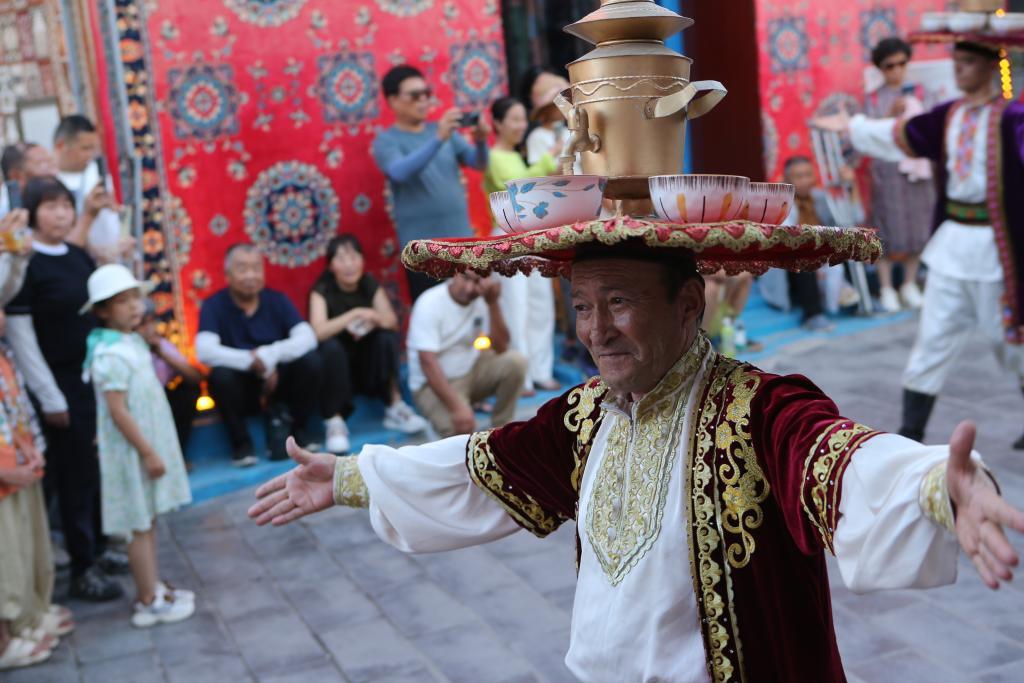
Parhat Emin performs the Samawar dance in the Qiuci Alley of Kuqa City, northwest China's Xinjiang Uygur Autonomous Region, July 22, 2025. In the Qiuci Alley of Kuqa City, northwest China's Xinjiang Uygur Autonomous Region, Parhat Emin performs the Samawar (a Uygur term meaning "tea set") dance, a traditional Uygur greeting dance with a history dating back to the millennium-old ancient Qiuci State. His eyes shine brightly, and his smile is warm and welcoming. With a bronze pot and porcelain bowls balanced steadily on a plate over his head, his body spins smoothly, and his feet move as lightly as the wind. As he dances gracefully to the rhythm of traditional Uygur music, the surrounding audience burst into cheers from time to time.
Kuqa, where the ancient Qiuci State was mainly located, was a vital hub along the ancient Silk Road, bustling with merchants and the tinkle of camel bells. Today the Qiuci Alley is a popular tourist destination in Kuqa. From noon till midnight every day, dances including the Samawar are performed repeatedly in the block, filling the air with constant joy.
The Samawar dance was listed as an intangible cultural heritage of the Xinjiang Uygur Autonomous Region in 2007. Parhat, who has a deep love for this art form, is a key member of the Qiuci Alley's performance team. "This dance is the highest etiquette of our Uygur people for receiving guests," Parhat said. When the dance reaches its climax, he always invites the audience to join in, and joy merges with the music.
Parhat is not only a performer but also an instructor in the team. During intervals between performances, young performers often gather around him, learning movement techniques and listening to him talking about the cultural origins behind the Samawar dance.
The vitality of culture lies not only on the stage but also in the hustle and bustle of daily life. Dancing and cheering with performers and tourists in the Qiuci Alley is a unique segment that is often arranged as part of local couples' wedding ceremonies. Residents are always seen seated at tea houses in the alley, playing a dutar or rewap (both traditional Uygur musical instrument) while singing songs which sound cheerful yet melodious.
Looking at the bustling Qiuci Alley and the dancing crowd, Parhat's eyes crinkle with a smile. "Culture and dance are not supposed to be locked away in a chest," he says. In his opinion, the Samawar dance is endless like the snow water rushing down from the Tianshan Mountains. "The dance is alive. It is meant to be performed and passed on to the young." (Xinhua/Geng Xinning)
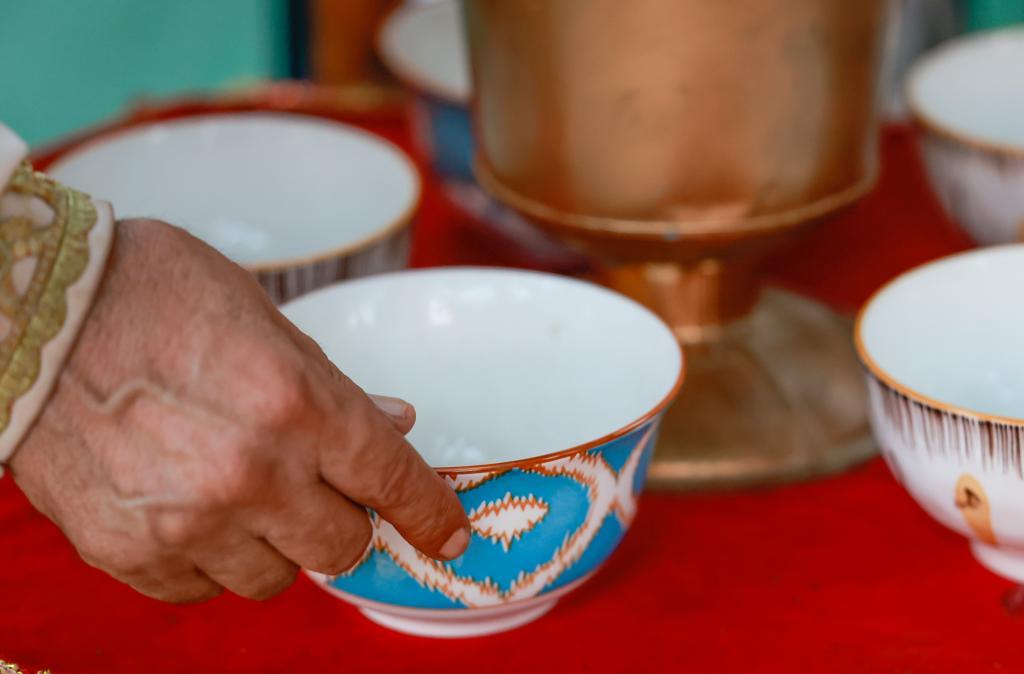
Parhat Emin arranges bowls for performing the Samawar dance in the Qiuci Alley of Kuqa City, northwest China's Xinjiang Uygur Autonomous Region, July 22, 2025. In the Qiuci Alley of Kuqa City, northwest China's Xinjiang Uygur Autonomous Region, Parhat Emin performs the Samawar (a Uygur term meaning "tea set") dance, a traditional Uygur greeting dance with a history dating back to the millennium-old ancient Qiuci State. His eyes shine brightly, and his smile is warm and welcoming. With a bronze pot and porcelain bowls balanced steadily on a plate over his head, his body spins smoothly, and his feet move as lightly as the wind. As he dances gracefully to the rhythm of traditional Uygur music, the surrounding audience burst into cheers from time to time.
Kuqa, where the ancient Qiuci State was mainly located, was a vital hub along the ancient Silk Road, bustling with merchants and the tinkle of camel bells. Today the Qiuci Alley is a popular tourist destination in Kuqa. From noon till midnight every day, dances including the Samawar are performed repeatedly in the block, filling the air with constant joy.
The Samawar dance was listed as an intangible cultural heritage of the Xinjiang Uygur Autonomous Region in 2007. Parhat, who has a deep love for this art form, is a key member of the Qiuci Alley's performance team. "This dance is the highest etiquette of our Uygur people for receiving guests," Parhat said. When the dance reaches its climax, he always invites the audience to join in, and joy merges with the music.
Parhat is not only a performer but also an instructor in the team. During intervals between performances, young performers often gather around him, learning movement techniques and listening to him talking about the cultural origins behind the Samawar dance.
The vitality of culture lies not only on the stage but also in the hustle and bustle of daily life. Dancing and cheering with performers and tourists in the Qiuci Alley is a unique segment that is often arranged as part of local couples' wedding ceremonies. Residents are always seen seated at tea houses in the alley, playing a dutar or rewap (both traditional Uygur musical instrument) while singing songs which sound cheerful yet melodious.
Looking at the bustling Qiuci Alley and the dancing crowd, Parhat's eyes crinkle with a smile. "Culture and dance are not supposed to be locked away in a chest," he says. In his opinion, the Samawar dance is endless like the snow water rushing down from the Tianshan Mountains. "The dance is alive. It is meant to be performed and passed on to the young." (Xinhua/Wang Fei)
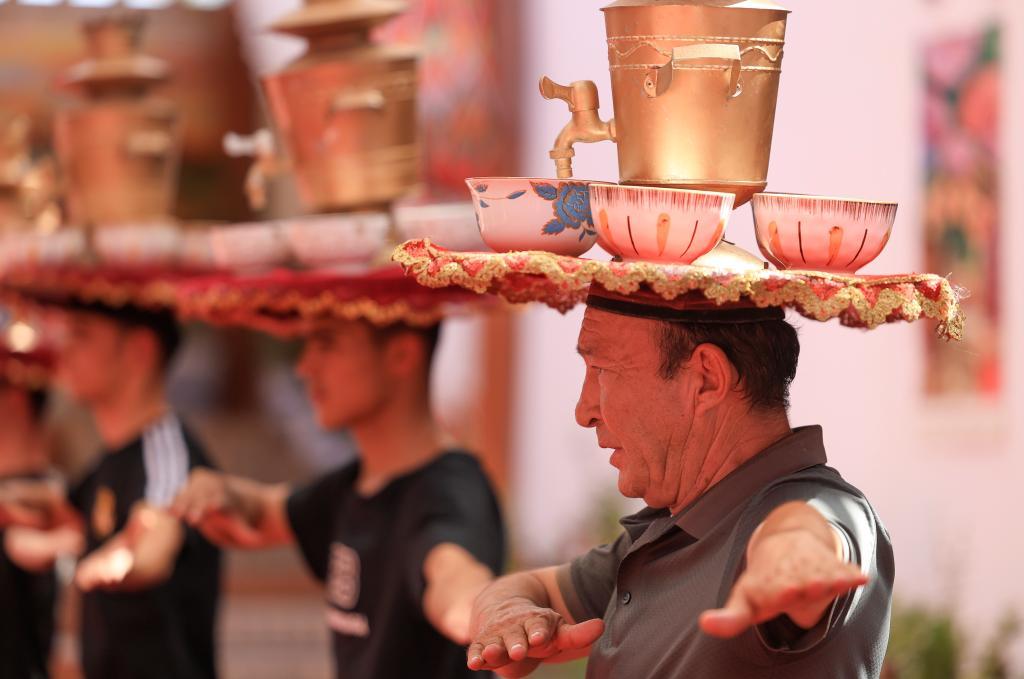
Parhat Emin (1st R) teaches young dancers the move of Samawar dance in the Qiuci Alley of Kuqa City, northwest China's Xinjiang Uygur Autonomous Region, July 22, 2025. In the Qiuci Alley of Kuqa City, northwest China's Xinjiang Uygur Autonomous Region, Parhat Emin performs the Samawar (a Uygur term meaning "tea set") dance, a traditional Uygur greeting dance with a history dating back to the millennium-old ancient Qiuci State. His eyes shine brightly, and his smile is warm and welcoming. With a bronze pot and porcelain bowls balanced steadily on a plate over his head, his body spins smoothly, and his feet move as lightly as the wind. As he dances gracefully to the rhythm of traditional Uygur music, the surrounding audience burst into cheers from time to time.
Kuqa, where the ancient Qiuci State was mainly located, was a vital hub along the ancient Silk Road, bustling with merchants and the tinkle of camel bells. Today the Qiuci Alley is a popular tourist destination in Kuqa. From noon till midnight every day, dances including the Samawar are performed repeatedly in the block, filling the air with constant joy.
The Samawar dance was listed as an intangible cultural heritage of the Xinjiang Uygur Autonomous Region in 2007. Parhat, who has a deep love for this art form, is a key member of the Qiuci Alley's performance team. "This dance is the highest etiquette of our Uygur people for receiving guests," Parhat said. When the dance reaches its climax, he always invites the audience to join in, and joy merges with the music.
Parhat is not only a performer but also an instructor in the team. During intervals between performances, young performers often gather around him, learning movement techniques and listening to him talking about the cultural origins behind the Samawar dance.
The vitality of culture lies not only on the stage but also in the hustle and bustle of daily life. Dancing and cheering with performers and tourists in the Qiuci Alley is a unique segment that is often arranged as part of local couples' wedding ceremonies. Residents are always seen seated at tea houses in the alley, playing a dutar or rewap (both traditional Uygur musical instrument) while singing songs which sound cheerful yet melodious.
Looking at the bustling Qiuci Alley and the dancing crowd, Parhat's eyes crinkle with a smile. "Culture and dance are not supposed to be locked away in a chest," he says. In his opinion, the Samawar dance is endless like the snow water rushing down from the Tianshan Mountains. "The dance is alive. It is meant to be performed and passed on to the young." (Xinhua/Wang Fei)
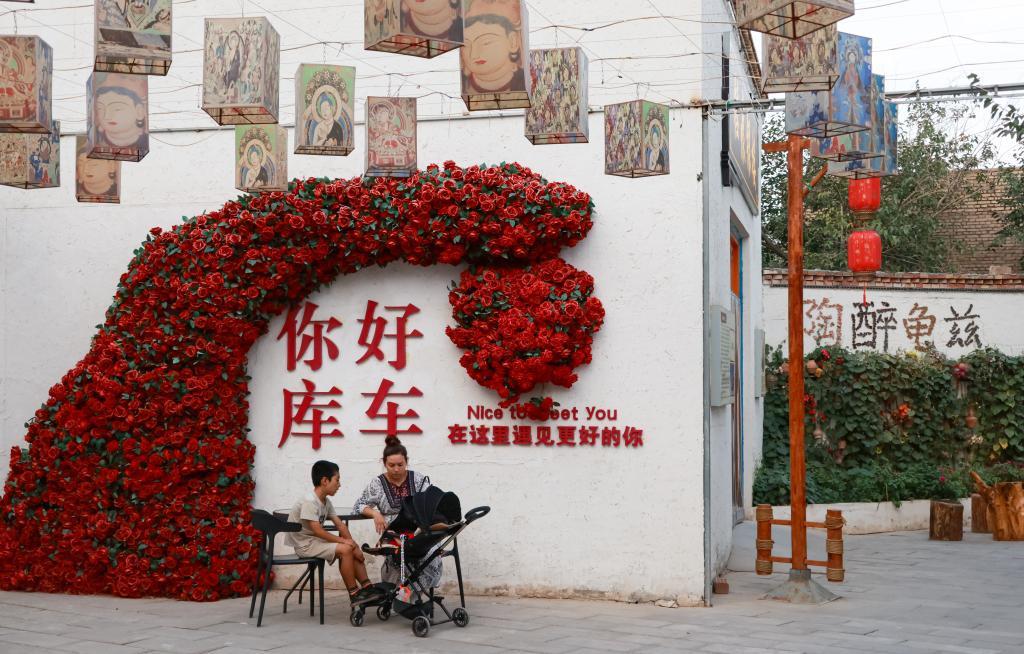
This photo shows a view of the Qiuci Alley of Kuqa City, northwest China's Xinjiang Uygur Autonomous Region, July 22, 2025. In the Qiuci Alley of Kuqa City, northwest China's Xinjiang Uygur Autonomous Region, Parhat Emin performs the Samawar (a Uygur term meaning "tea set") dance, a traditional Uygur greeting dance with a history dating back to the millennium-old ancient Qiuci State. His eyes shine brightly, and his smile is warm and welcoming. With a bronze pot and porcelain bowls balanced steadily on a plate over his head, his body spins smoothly, and his feet move as lightly as the wind. As he dances gracefully to the rhythm of traditional Uygur music, the surrounding audience burst into cheers from time to time.
Kuqa, where the ancient Qiuci State was mainly located, was a vital hub along the ancient Silk Road, bustling with merchants and the tinkle of camel bells. Today the Qiuci Alley is a popular tourist destination in Kuqa. From noon till midnight every day, dances including the Samawar are performed repeatedly in the block, filling the air with constant joy.
The Samawar dance was listed as an intangible cultural heritage of the Xinjiang Uygur Autonomous Region in 2007. Parhat, who has a deep love for this art form, is a key member of the Qiuci Alley's performance team. "This dance is the highest etiquette of our Uygur people for receiving guests," Parhat said. When the dance reaches its climax, he always invites the audience to join in, and joy merges with the music.
Parhat is not only a performer but also an instructor in the team. During intervals between performances, young performers often gather around him, learning movement techniques and listening to him talking about the cultural origins behind the Samawar dance.
The vitality of culture lies not only on the stage but also in the hustle and bustle of daily life. Dancing and cheering with performers and tourists in the Qiuci Alley is a unique segment that is often arranged as part of local couples' wedding ceremonies. Residents are always seen seated at tea houses in the alley, playing a dutar or rewap (both traditional Uygur musical instrument) while singing songs which sound cheerful yet melodious.
Looking at the bustling Qiuci Alley and the dancing crowd, Parhat's eyes crinkle with a smile. "Culture and dance are not supposed to be locked away in a chest," he says. In his opinion, the Samawar dance is endless like the snow water rushing down from the Tianshan Mountains. "The dance is alive. It is meant to be performed and passed on to the young." (Xinhua/Wang Jingqiang)
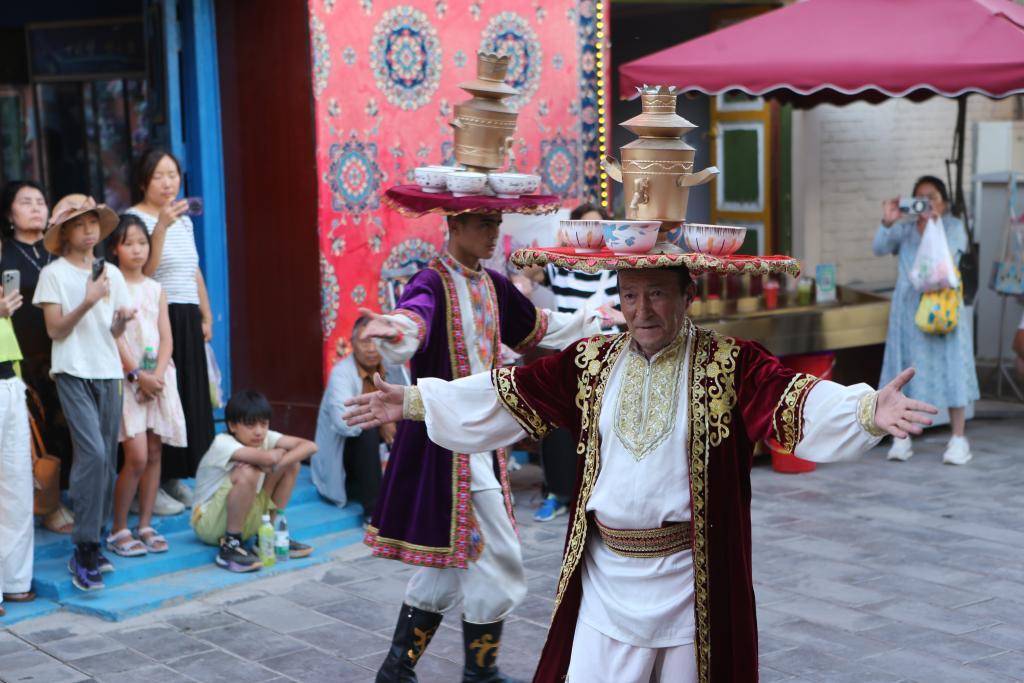
Parhat Emin performs the Samawar dance in the Qiuci Alley of Kuqa City, northwest China's Xinjiang Uygur Autonomous Region, July 22, 2025. In the Qiuci Alley of Kuqa City, northwest China's Xinjiang Uygur Autonomous Region, Parhat Emin performs the Samawar (a Uygur term meaning "tea set") dance, a traditional Uygur greeting dance with a history dating back to the millennium-old ancient Qiuci State. His eyes shine brightly, and his smile is warm and welcoming. With a bronze pot and porcelain bowls balanced steadily on a plate over his head, his body spins smoothly, and his feet move as lightly as the wind. As he dances gracefully to the rhythm of traditional Uygur music, the surrounding audience burst into cheers from time to time.
Kuqa, where the ancient Qiuci State was mainly located, was a vital hub along the ancient Silk Road, bustling with merchants and the tinkle of camel bells. Today the Qiuci Alley is a popular tourist destination in Kuqa. From noon till midnight every day, dances including the Samawar are performed repeatedly in the block, filling the air with constant joy.
The Samawar dance was listed as an intangible cultural heritage of the Xinjiang Uygur Autonomous Region in 2007. Parhat, who has a deep love for this art form, is a key member of the Qiuci Alley's performance team. "This dance is the highest etiquette of our Uygur people for receiving guests," Parhat said. When the dance reaches its climax, he always invites the audience to join in, and joy merges with the music.
Parhat is not only a performer but also an instructor in the team. During intervals between performances, young performers often gather around him, learning movement techniques and listening to him talking about the cultural origins behind the Samawar dance.
The vitality of culture lies not only on the stage but also in the hustle and bustle of daily life. Dancing and cheering with performers and tourists in the Qiuci Alley is a unique segment that is often arranged as part of local couples' wedding ceremonies. Residents are always seen seated at tea houses in the alley, playing a dutar or rewap (both traditional Uygur musical instrument) while singing songs which sound cheerful yet melodious.
Looking at the bustling Qiuci Alley and the dancing crowd, Parhat's eyes crinkle with a smile. "Culture and dance are not supposed to be locked away in a chest," he says. In his opinion, the Samawar dance is endless like the snow water rushing down from the Tianshan Mountains. "The dance is alive. It is meant to be performed and passed on to the young." (Xinhua/Geng Xinning)
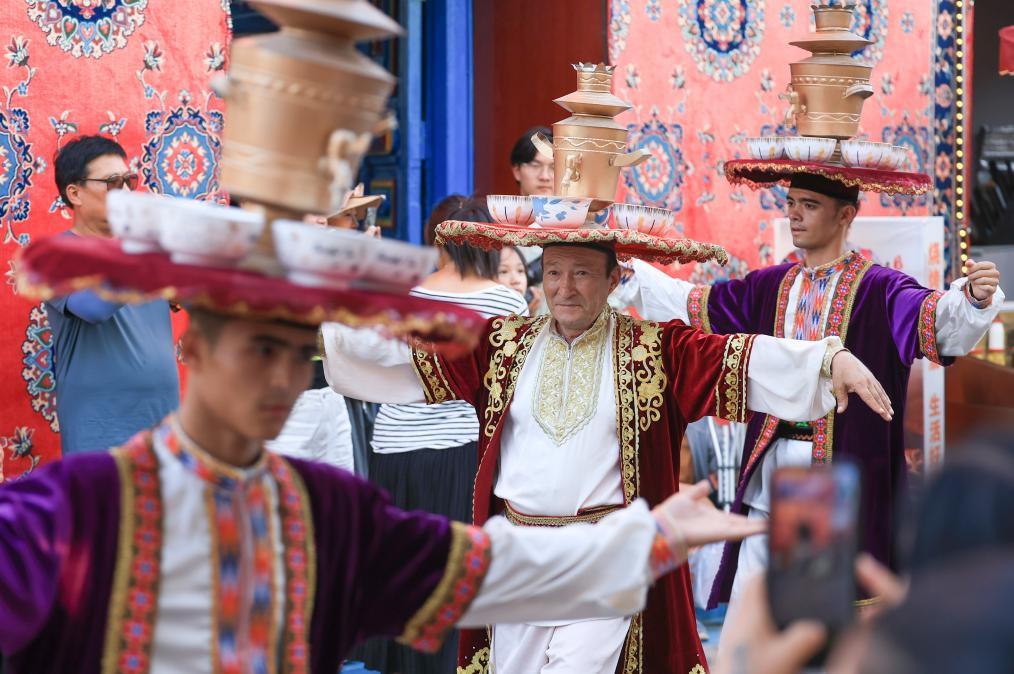
Parhat Emin (C) performs the Samawar dance in the Qiuci Alley of Kuqa City, northwest China's Xinjiang Uygur Autonomous Region, July 22, 2025. In the Qiuci Alley of Kuqa City, northwest China's Xinjiang Uygur Autonomous Region, Parhat Emin performs the Samawar (a Uygur term meaning "tea set") dance, a traditional Uygur greeting dance with a history dating back to the millennium-old ancient Qiuci State. His eyes shine brightly, and his smile is warm and welcoming. With a bronze pot and porcelain bowls balanced steadily on a plate over his head, his body spins smoothly, and his feet move as lightly as the wind. As he dances gracefully to the rhythm of traditional Uygur music, the surrounding audience burst into cheers from time to time.
Kuqa, where the ancient Qiuci State was mainly located, was a vital hub along the ancient Silk Road, bustling with merchants and the tinkle of camel bells. Today the Qiuci Alley is a popular tourist destination in Kuqa. From noon till midnight every day, dances including the Samawar are performed repeatedly in the block, filling the air with constant joy.
The Samawar dance was listed as an intangible cultural heritage of the Xinjiang Uygur Autonomous Region in 2007. Parhat, who has a deep love for this art form, is a key member of the Qiuci Alley's performance team. "This dance is the highest etiquette of our Uygur people for receiving guests," Parhat said. When the dance reaches its climax, he always invites the audience to join in, and joy merges with the music.
Parhat is not only a performer but also an instructor in the team. During intervals between performances, young performers often gather around him, learning movement techniques and listening to him talking about the cultural origins behind the Samawar dance.
The vitality of culture lies not only on the stage but also in the hustle and bustle of daily life. Dancing and cheering with performers and tourists in the Qiuci Alley is a unique segment that is often arranged as part of local couples' wedding ceremonies. Residents are always seen seated at tea houses in the alley, playing a dutar or rewap (both traditional Uygur musical instrument) while singing songs which sound cheerful yet melodious.
Looking at the bustling Qiuci Alley and the dancing crowd, Parhat's eyes crinkle with a smile. "Culture and dance are not supposed to be locked away in a chest," he says. In his opinion, the Samawar dance is endless like the snow water rushing down from the Tianshan Mountains. "The dance is alive. It is meant to be performed and passed on to the young." (Xinhua/Wang Fei)
【未經授權,嚴禁轉載!聯系電話028-86968276】